EP20 Shawn Kanungo - Al Agents Are Here: How Leaders Should Think Bigger Now
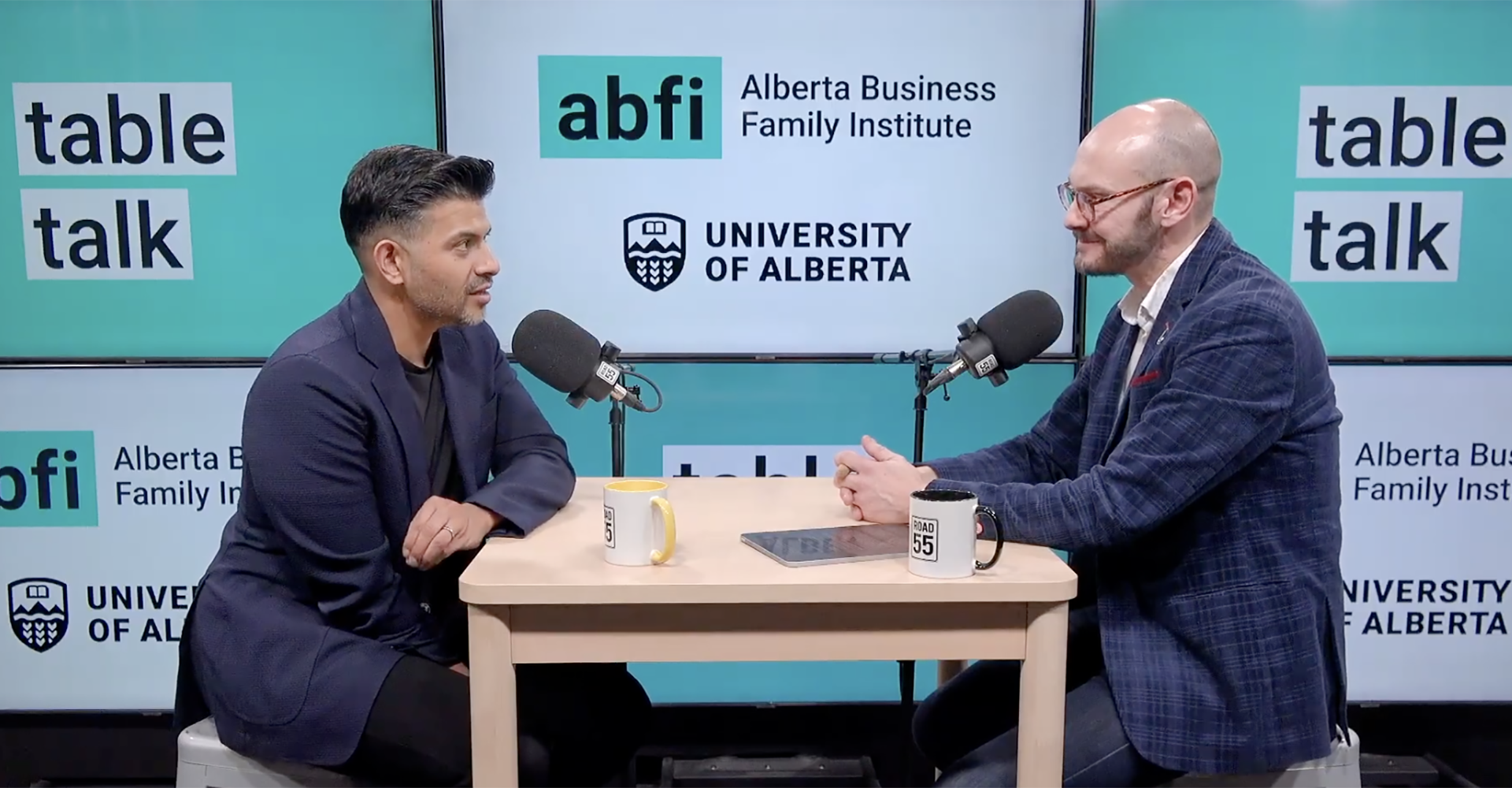
Listen to the podcast



Podcast Transcript
Speakers
Speaker 1: Matt Knight
Speaker 2: Shawn Kanugo
Matt Knight 0:00
Welcome to Table Talk. Today, we're sitting down with one of the most disruptive and innovative people I know, someone who grew up in Edmonton, watching his father build an accounting practice, who cut his teeth at Deloitte and now talks to audiences all around the world about disruption and innovation. We'll hear about his succession story, how he had to step into his father's practice, and what that experience taught them. We'll dig into what we call the AI paradox, where the very traits that help family businesses are actually what make them cautious about AI, but could actually become their greatest competitive advantage and help them adopt AI even faster. We'll also talk more about where this is all heading. When are we going to start to see agents? What's the power of agents? How are we going to work to learn about the most powerful year of our life, and how can we take advantage of this disruption that's happening now?
Welcome to Table Talk The show where business families share candid stories of growth, leadership and legacy. I'm Matt Knight, your host and executive director with ABFI.
Today I'm joined by Shawn Kanungo, an innovation strategist and keynote speaker. Shawn spent over a decade at Deloitte, advising organizations on digital strategy, before launching his own practice helping leaders and organizations navigate disruption. He was recently announced as a keynote speaker at the Nordic Business Forum, along with some of the biggest names in business, Shawn's a friend of ABFI having headlined our innovation and disruption event in November, alongside our friends at Halford consulting, ATB wealth and HLH.
Shawn Kanungo 1:41
I love that intro. Listen. If you got this far, rate review, subscribe, whatever you got to do to this pod, because that was an incredible intro. We should just cut it right there. Nice. Set it up. Let's go.
Matt Knight 1:52
Yeah, so we're gonna start with probably an area you don't talk about that much. Yeah, the family side. So you grew up in Edmonton. Your dad was an accountant. He built his practice for probably over four decades. Take us back. What do you remember growing up around an accountant?
Shawn Kanungo 2:11
You know, watching him build the business. What were the dinner table conversations like for you and your dad and your family? Yeah, I think, like most entrepreneurs or most founders, you know, building your business is probably one of the most stressful things that you can do. And so I just my, my recollection of my dad is him just grinding, right, actually. So he used to work at Ed tell and then he would moonlight on the side before he actually went off and started his own accounting practice. So he had his, you know, he had his accounting business, but then he was, like, moonlighting on the side while he was at, you know, working at, at, tell and, and it was just incredible see his work ethic, and see him, like, starting this business, very client service oriented. And, you know, just just being an accountant, just the number of people that you're seeing from a day to day basis. So people used to come into our house, right? Clients used to come to our house and meet with their accountant, who was my dad, and then when he moved to an office, yeah, it was just, it was incredible to see the amount of work, the amount of stress, the amount of grind, but he loved it.
He loved servicing clients. And I think, you know, that's the beautiful part about, I guess, you know, entrepreneurs or founders or small business owners is that they are, you know, they, they, they're passionate about their business. And I know my father was passionate, and I think that's why I always want to find something that I was passionate for. Maybe it's just seeing my father, sorry. So it's kind of a good feed into so you joke a couple of times in some of your live shows about, you know, kind of growing up in a South Asian household, you kind of had four career options. You could be a doctor, an engineer, a lawyer or a doctor, yeah, yeah.
Matt Knight 3:35
How did that kind of shape your early career ambitions and where you took your career?
Shawn Kanugo 3:40
Well, you know, it's interesting, I think, you know, growing up in a very traditional South Asian household. And then also, I think when you're in university, I don't know, for some reason, everybody comes with these wild ideas of what they want to do in life, and then they get into business, and they're like, Wait, there's only, like, four, there's, like, marketing, finance, you know, accounting. And then it's incredible how, like, really smart people coming into university, somehow just, they just collide on a certain number of different areas.
So for me, I think it was just like there was a pressure to do something that was safe. There was a pressure to do something that was traditional. And, you know, I always had this ambition to do something, you know, whether it's entrepreneurship or do something bold, but there certainly is a push, because you want to do something that you know society will will, I guess, reward you for. And I think what happens in school is that status is such a big thing. Like you see people coming out of school and they, you know, they're getting a nice car, they're wearing a nice suit to the office. They're with their friends. And, you know, accounting was like such a seductive part, because you're just like, it's kind of like going to another high school.
And so I think all of those things, you know, really push you to do something very traditional. And I really, I don't want to make the same mistake for my kids. I want them to focus on something that they're world class in, that they enjoy, that they love, that they can put their 24/7 hustle and grind into. And I think that's just yeah, just part of living in a very like traditional household.
Matt Knight 5:37
So kind of early on in that Deloitte journey, when you're doing the accounting thing, doing your CPA or your CA, back then, was the plan ever to kind of go back and work with your dad or take over his practice? Did you ever have those succession conversations?
Shawn Kanungo 5:53
Yeah, I mean to be honest with you, so I never, I never had any ambitions to take over my dad's business. To me getting a CA, at the beginning was like, I'm gonna do this. This is like, this is the safest thing I can do now, and I am hopefully going to do entrepreneurship at some point. But then I got, you know, I I saw consulting as a path, and then I only spent a couple years in in accounting, and then move quickly into, you know, the managed consulting field, and that that was more aligned to, like my interests around digital and then at the same point, yeah, the same time I was building mobile apps, I was getting more involved in the digital innovation ecosystem, connecting with like startup Edmonton, and seeing all these builders and creators. And that's kind of was my MBA, which was really just building products and learning about innovation, learning about products and UX and UI and design and putting things out in the world. And to me, that was the real that's when the real learning started, when I just, when I took it in my own hands and started to build things for myself.
And yeah, so to me, it was all it was never like the goal to be an accountant. It was just the goal was like, to have something safe, and then, you know, where can I move from, from there and do something that was a big, a little bit bigger.
Matt Knight 7:11
So kind of sounds like you did follow your father. So you had that kind of secure day job, you know, nine to five at Deloitte, although no one ever worked nine to five at Deloitte.
Shawn Kanungo 7:20
Yeah.
Matt Knight 7:21
And then had that ability to follow your passion and do the things that excited you outside of that to kind of build towards that goal.
Shawn Kanungo 7:27
Yeah, and I don't regret it. I don't regret, you know, I don't totally regret the experience of going through traditional professional services. I think, cutting your teeth and getting your face punched like a million times, and working those hours. And, you know, doing something that's very difficult is incredibly rewarding, and that I actually appreciate that level of suffering. So I'm, I'm, I'm, I'm grateful for the experience. And yeah, it was, it was an incredible time, but I think the world has changed now, and I think there's so many more abilities to do things and create things and build things now than there ever was ever before. And so I would not recommend the path that you know, I wouldn't recommend the path that I took, but I just think that you should explore more, and you should, you should find what, find out what you love and what you're interested in. Yeah, and yeah, and
Matt Knight 8:17
I don't think anyone's ever found success or greatness by copying what someone else did exactly.
Shawn Kanungo 8:25
Yeah.
Matt Knight 8:26
You have to find your own path. You have to figure out what works.
Shawn Kanungo 8:33 Yeah, except for Kobe Bryant, because he followed Michael Jordan's path and he became pretty successful. So yeah, yeah. Seminal.
Matt Knight 8:36
So one of the stories that you share from stage is about how you know when you're when your father passed away,I think you said it was kind of sudden or unexpected, and you had to kind of walk into his office at some point. You know, you kind of talked about, like going into all these filing cabinets and all these boxes and probably balancing that, that grief, but also overcome with all of these documents and trying to figure it out, what, what did take us back to that? What did that feel like? What did you go through there?
Shawn Kanungo 9:07
Yeah, yeah. So my father, actually, yeah, he passed suddenly in 2008 and, you know, it was like, right before, so he passed in, you know, April of 2008 and so he was, like, a tax accountant. So, you know, taxes were due at the end of, like, you know, in April, right?
And so, as a solo practitioner, you know, I was thinking, okay, so what are all these clients gonna do? They're gonna, at some point gonna ask. They're gonna all Google, what happens when my accountant dies? And I was doing the same thing. I was Googling the same thing, what happens when your accountant dies? Because I knew that there was gonna be a whole bunch of people coming to our house or the business. And so the next day, the day after my father passed away, I went into his business just to see what I was dealing with, because I knew that this was such a critical time. And yeah, just walking. In and seeing all that paper you seeing all the filing cabinets and just trying to, just trying to dig into, you know, what you know, how do I take over this business? How do I do it in a way that is seamless? How do I transit? How do I actually, can I run this? Can I transition this? Can I sell this? I like? I had no idea, right?
Luckily, I had a good one of my good friends, his father, Mabu choleri. He was also an accountant, and he stepped in during that time as well, and kind of mentored me through that, throughout that process. But it was, you know, I had to take, I knew I had to take over the business and help my family out. Because at that point, my father was the only one, you know, making money in our family. And so for me, it was just this process of understanding his systems. And what I realized is that although my dad was a good accountant, he had terrible systems.
Matt Knight 10:52
Yeah.
Shawn Kanungo 10:52
Right, he had it. He just, like, it was just a circus in there. And he didn't have good systems, and it was difficult. And to be honest with you, I think part of the reason why I think that we did not get the valuation for the book of business, is because he didn't have a good system, and he didn't build that in. And I think because somebody came in and they saw the mess, but they saw, you know, a great book of clients that they were able to undercut and, and, and, you know, buy this business.
I don't regret that part, but, you know, it's just yeah, I realized very early on that you need to have a good system,
Matt Knight 11:33
Yeah. So besides from kind of having that good system, what did you learn about succession planning or the lack of it from that experience?
Shawn Kanungo 11:40
I mean, yeah, there was no succession planning. There was no plan. And I think you realize very quickly how important it is to have a succession plan, even if you don't even have to be on your deathbed, just like at the beginning of the journey. Like, how do you, how do you start and figuring out, you know how you're going to transition this. And I think the greatest business is a business that you can, you can turn over tomorrow and be like, Hey, you can take, take the keys to the kingdom and run it.
And so to me, what was really impactful was saying, yeah, it was learning about how to, how to create a system where you can just hand it over. And I think, you know, I know we're gonna get to the conversation on AI, but to me, that's what actually AI does really well. It's like, it forces you to document the system. It forces you to document your process that's at the end of the day. And so, you know, I learned a lot about that, and I learned a lot about, like, people at the end of the day and just the the, you know, people are incredibly sympathetic, but at the end of the day, people still need to get stuff done and they need to move on.
And so, you know, although many people are grieving about their accountant passing away, God bless. They also were like, Okay, I need to, like, I need to get my taxes done. I need to get these, you know, these corporate accounts filed. And so, yeah, it was, I think that that, I guess, that unemotional piece of a business was very apparent right away. And, and I think that, I think that's great, like, you have to also know that the world moves on, and people, people got to get their stuff done.
Matt Knight 13:25
So kind of last reflection on, kind of some of that earlier personal stuff. And then we will move on to the fun AI stuff. But you know, you went a very different path than maybe you thought you would. Or then, you know, a textbook would have thought you would early on. You know, your dad kind of expected you to be an accountant. Maybe. What do you think he'd think about what you're doing now, you know, how do you think he'd react to one of your keynotes?
Shawn Kanungo 13:47
Yeah. I mean, I think I think about this all the time. Like, my father passed away two dozen eight and like, he never saw me get married, he never saw me have kids. He never saw my career, sort of, you know, come through and, you know, one of the things I think about my kids is that, you know, because of the internet, because of media, it's so well documented, like my career is so well documented. There's videos, there's podcasts, and it's like having a documentary field crew, you know, around you the entire time, just and so my kids can look back at, okay, what, what was my father like at 40.
Matt Knight 14:26
Yeah.
Shawn Kanungo 14:26
And they can go back and take a look and see, because it's all for them to see. And I wish I had that. I wish I could go back and see. I wish I could go back and see what my father was thinking at that time. It's just that information is not available. Yeah, no, I think my father was, you know, he never expected me to be an accountant, or he just expected me to do something that was, I think, that I probably, I think, deep down, he just wanted something that I enjoyed at the end of the day. And I think he would be, yeah, I know that he would be happy. And I know I, Um, he would be happy with the decisions I made with a great wife and three kids and and, yeah, it's just unfortunate that he couldn't see that, right?
So it's funny, because I'm 41 my father had me at 41.
Matt Knight 15:16
Okay.
Shawn Kanungo 15:16
I sometimes I don't know why I do this as like, a check. Sometimes I'm like, Okay, well, I'm a little ahead of my dad, right? My dad was an I'll never, I'll never compete against my dad. But it's like, okay, I had three kids before my dad. Hopefully I live longer than my dad. I can see my kids a little bit, you know, more, through and see where they where they're gonna go. So yeah, I think about that all the time.
Matt Knight 15:34
Yeah, no. It's a good reflection to kind of stop and have every once in a while,
Shawn Kanungo 15:34
Yeah. And just Yeah.
Matt Knight 15:34
And just, it's an interesting point to kind of think about. So that kind of personal journey gives us a little bit of a lens of, you know, kind of what some family businesses or small entrepreneurs might be going through as well. The work that we do with family businesses and, you know, the work that Deloitte and PwC puts out shows that, you know, kind of 60% of family businesses, family businesses see AI as a growth opportunity. You know, 40% of them call it a strategic opportunity. And those are kind of, you know, weird numbers.
Shawn Kanungo 16:10
So 100% see them as an opportunity.
Matt Knight 16:12
Basically, yeah.
Shawn Kanungo 16:14
But when we when we say, you know, all of these businesses are identifying this as an opportunity and something they want to do, there's a huge gap in the actual action. Though, there's so many of them that aren't actually taking the right steps, or the appropriate steps, or any steps to put it into action.
Matt Knight 16:31
You know, what do you think might be holding some of these family businesses back from, from implementing AI,
Shawn Kanungo 16:37
Yeah. I mean, I see it as a couple things. Number one, it's the fear of new technology. It's the fear of change. Anytime you have something that's new, that's foreign, that seems like it's difficult, we tend to push back, or we tend not to lean in. And that's happened with every single technology throughout human history. We always disregard anything that's new and novel, and we think it's going to be a fad, or we think it's not going to work, you know, I think about, you know, the internet. And people said, you know, I don't want to put my credit card online and then banking information online, and then, you know, everybody did. Or, you know, I don't want to get into a car within the backseat of a, you know, Uber - what if he's a psychopath? And now we jump into cars with psychopaths all day long. Every single disruptive technology is seen as, like, cringy or creepy or fearful, and then it changes everything. And so that's just human nature. We don't like change. And so to me, that's probably the biggest piece.
I think that the next piece really is around skills like the talent within your organization to actually figure out how to implement this, how to create value out of it, and it's just the understanding and education around it. And I think the last piece, which I think is a complete myth and completely overrated, is around the security aspect. I think that is, you know, people point to that already without even thinking about it. Or they, they, they, they just, they just, they use that as an excuse for not trying something. And so I think those are the, probably the top three reasons.
But what do you, what I mean, you're in the space, like, what do you? What do you, what are you finding from folks about, you know, why they're not adopting it? Like, I would think that everybody should be racing towards this, yeah,
Matt Knight 18:16
And a lot of it is a lot of those same things. It's the fear of the unknown. It's the, you know, there's a lot of the saving face, like, there's a huge brand associated with some of these families with multi generations, you know, who wants to be the person who, you know, tries something new and, you know, loses the farm or loses the family business.
Shawn Kanungo 18:35
Yeah.
Matt Knight 18:36
So there's a lot of historical, you know, risk aversion, that's at play. But then there's also so much innovation, and especially when we have the new gen, or the next gens coming in through the company and joining them, and, you know, they bring all these new ideas and this New Energy.
Shawn Kanungo 18:54
Yeah.
Matt Knight 18:54
So that, you know, kind of leads us into some of the research that we're doing at the university. We've come up with this concept of the AI paradox, talked about a little bit at the beginning, but basically these things that are making family businesses really good and successful are also some of the things that are holding them back. So some of those things are patient capital, so they have, you know, more access to capital sometimes, but they're typically very conservative with how they deploy that capital. And the second one is the values driven culture, so really trying to do things around family or around those family values. And then the third one is kind of deep relationships, which sometimes and often comes with, you know, proprietary data access. So all of those things, you know, those relationships, the values, the capital.
Shawn Kanungo 19:41
Yeah.
Matt Knight 19:42
It creates this tension.
You know, how do you think? What do you think about those kind of three, three pillars as kind of being the things that that might be that paradox, or that families are struggling with?
Shawn Kanungo 19:56
Well, you know, I don't see it as a paradox. I mean, I'm confused as to why is it? Pair. I think, I think, you know what AI allows you to do. It allows you to have more capital. It allows you to have more time and trust and affinity and loyalty with your customers at the end of the day. It gives you that time. And so every family business should be rushing towards figuring out, you know, I look at the world in two extremes, and I think the only two types of companies that will win will be companies that are incredibly fast and agentic and and, and, you know, frictionless. And then companies that are, you know, all about trust and loyalty and brand equity, and you know, all that stuff. And those actually can work together.
And I would challenge every, you know, Owner, every professional to say, how do we actually look at our processes? And it should be either incredibly frictionless, or it should be about humanity at the end of the day. And so to me, it's, it's AI is actually so maybe, maybe I'm reading this to me, AI is an incredible accelerant for everything that happens within family business, because it's going to open up, it's going to allow you to be able to allocate your capital in different ways. It's going to be able to, yeah, it's going to be able to allow you to do so many more things that actually strengthen your competitive advantage when it comes to family businesses.
I actually believe that my hot take is that family business is one of the best businesses to be in today, because the only moat left is your brand. And family businesses have that history. They have that legacy at the end of the day, and that's so hard to build today. And to me, when technology is becoming increasingly more commoditized, what's left. And to me, that is like one of the most enduring moats, which is around your name,
Matt Knight 21:47
Your name, your your identity, yeah, kind of the story of where the business.
Shawn Kanungo 21:52
But what am I? Am I reading the paradox correctly? Or am I?
Matt Knight 21:56
So it's yes, but it's essentially like those are the exact same reasons why we hear family businesses aren't going to AI, right? Because of the relationships, is because of the trust, because of the values, but like, like you said, we see them as the enablers. Yeah, it just needs that, that shift to go from, okay, well, these relationships that you know are so important to us. If I'm using AI agents, or agentic AI or whatever, it looks like, more more in my organization, that means I have more time.
Shawn Kanungo 22:28 100%
Matt Knight 22:29
And you know, but originally that, the pushback is, well, I don't have time to figure this out. I don't have time to put it in action, right?
Shawn Kanungo 22:37
Right? That now I see it, yeah, but yeah, it's absolutely the case where the more that you can deploy an agent, and you know, within your organization, the more that and we can talk about agents a little bit, but you know it's gonna be, it's gonna be incredible for these businesses to focus on what they're valuable
Matt Knight 22:54
Yeah, and it's gonna free up so much more of that time and the resources for them to do that. So we'll get to agents before we do so before Christmas, you know, we you came out to Edmonton to do that session for us.
Shawn Kanungo 23:06
Yeah? It was amazing. Thanks for hosting me. I appreciate it.
Matt Knight 23:08
It was awesome. Yeah, awesome evening. So since then, there's been some huge shifts in AI, you know, we got Claude code, we have co work, we have chat GTP agent, we have the Google auto browser, we have vibe coding, which is more or less mainstream now, you know, and you don't seem surprised by any of these, but you know, these shifts, like, like you were talking about earlier, are becoming so much faster, yeah, and that rate of change is just exponential,
Shawn Kanungo 23:37
Yeah?
Matt Knight 23:38
So how do you keep up?
Shawn Kanungo 23:39
Yeah? First of all, I would disagree. I'm actually, I'm surprised every day. I'm actually, I'm not. It's not like I'm not, I'm actually surprised every day as to how good this stuff is getting. Yeah, and you know, for me, I it's just we're living in the greatest era of technology, of advancement, of exponential change, you know, than ever before. And so to me, I'm waking up every single day excited to say, you know, how can I help others? How can I help myself leverage this technology for good? And the way that I keep up is probably, like most people, which is, I try to, I try I don't just try to learn. I try to, I try to build. I want to create. I want to take something that's new, like the latest tools, the latest models from anywhere, the Chinese models, the leading large language models, the use cases of the future. I want to try and build it and apply it to the companies that I'm helping or even in my own life. So to me, that's the best way to keeping up.
The second thing is, you know, I have a lot of colleagues that are at, you know, leading organizations, leading organizations that are deploying some of these large language models. I'm also talking to business owners and leaders and executives all day long to see what they're doing. So. You know, it's just constantly, you know, just that, just a feed of information, but really, the real learning at the end of the day is about doing. And you learn best when you try and you implement. And my job whenever I do a keynote is I, when I go to an organization, I'm trying to do their job better than they do their job. And so if I can show them some tools, or if I can show them some use cases that could disrupt what they do, then, then I am done. I've done my job so that, like this guy, he's not an expert in my industry. He's not like 20 years, 30 years in my job, in my job, but if he can help, if he can do it, then I can do it.
And so to me, that's what I try to leave folks with, especially when it comes to the AI talks, is, is, yeah, to give people that inspiration, that you can go off and do things, but yeah, every day, like, you know, I think, you know, and it's like a, it's like a, it's like a arms race, right? Because, like, one day, like, you know, chat GPT will be winning, and then it's Gemini, and now it's Claude, you know, I think Claude is kind of leading the pack right now. And, you know, it might be grok, you know, soon. So it's always changing, and the things that you can do today are just mind blowing, and, and, and that's why I don't want anyone under hype like I'm talking to leaders all the time that are implementing this stuff, that are doing things with this, and they're excited. I just got off a call with a CEO right before this, and he's like, I just wake up every single day saying, What can I go off and automate so that I can create value in my organization? Incredible,
Matt Knight 26:32
Yeah, it's a pretty amazing time, right? Yeah. So what? What's kind of been, been your biggest surprise? And yeah, in the AI space. And the last couple of weeks.
Shawn Kanungo 26:42
Oh, my God. So the biggest mindset shift for me in the last, I would say, three weeks, has been using this new tool called Open Claude. Now open claw, what it is, it's an open source tool that allows you to leverage different large language models you can use. Models. You can use Claude, Gemini, whatever you want. And the difference is that it's 24/7 it's always on. It's like having a 24/7 personal chief of staff that can get stuff done. And you know, the difference for me, it's like, you know, I'll go to bed and be like, hey, like, you know, here's the tasks. And they'll say to me, Hey, go to bed. I got this. I'll update you in the morning. And it never stops. It's always running.
And so to me that the mindset shift for me has been I actually have to, I actually have to think bigger. I have to think bolder, because I'm running out of things for it to do, because it can go off and just go off and execute just like a human can. And by the way, it's smarter than any other human. And so the mindset shift for me has been, what, what can ai do the humans could never do. What can an army of 24/7 AI agents do that humans could never do? What an exciting question to ask, because we always talk about this question around, you know, will AI take jobs?
And the reality is, of course, AI is going to take some jobs. Most importantly, it's going to take jobs that humans could never do. And I think that's the most exciting question that we could ever ask. And I think the question that we should be asking every family business owner or leader, saying, you know, if you had a five year plan, how would you actually do that five year plan in six months? And the reason why I asked such an absurd question is because you literally have to train your mind to think exponentially. And when you ask the question, how do I complete my five year plan in six months? You can't just optimize your existing processes. You actually have to start from zero and say, How do I rebuild this, knowing everything I know about all the tools and technologies you can optimize you have to reimagine. And when you have an AI agent, or army of AI agents that can work 24/7, it unlocks so much for you. And so to me, that's been the mindset shift. And to be honest, you, I'm struggling with it.
Matt Knight 29:10
Yeah.
Shawn Kanungo 29:10
I'm trying to figure it out. Because, like, you know, you know, we're here at the University of Alberta, if I gave you 100 MBAs right now, you wouldn't know what to do with them, and that's what we have right now. We have 100 MBAs at our fingertips, and we have no idea what to do with them. What an exciting what an exciting question,
Matt Knight 29:31
Yeah, and that's like, so how do we manage them? Like, when do they start showing up on org charts? When do we start having performance reviews with them?
Shawn Kanungo 29:39
I mean, I think number one is that I think it is going to be a human like within an organization. If you don't have an AI agent besides you helping you out, then you're, you're going to be working in the, you know, in the 1970s i. Um, every single human that works within an organization should have an AI beside them that's helping them out. That is, that is doing the grunt work. I don't think humans should if you are, if you're not getting AI to do the grunt work, you are the grunt and I don't think that should be that's not a human. That's not what humans are designed for. Humans are designed to be creative and intuitive and imagine and, and, and and to build. That's what humans are designed for. And so the way that AI shows up in our organization, I think we need to shift the mindset about this org chart, because the org chart has flattened when everybody can do the work. Who's managing? We have all these the way that we design organizations. By the way, we have, like, with managers, senior managers, with VPs and senior VPs. And then, you know, we have a CEO, and then all of these people are designed to manage the work. But when AI can do so much, and not only can it think, but it can actually get stuff done. What are we managing? And so this is an opportunity to change our managers into builders, into creators. And when everyone has an AI, they can go off and execute, which transforming our organizations into, you know, an organization that has agency, that can actually get stuff done. That's what I'm excited about.
Matt Knight 31:20
Yeah, and that ability to just deploy that rapid change Yeah, and go from, like you said, a five year plan and in six months, yeah.
Shawn Kanungo 31:28
And I don't think your org chart really in terms of, like, adding AI to the org chart. I just think that's, I don't think that you should add AI to the org chart. You should just give AI to every single person in the organization so that they can personally, like to me, what AI is ultimately doing. It is amplifying your strengths, right? So if you're a salesperson and you hate the back end work, okay, by the way, we have an AI agent that can do that. If you're an engineer and you love being in the details, but you can't visualize your ideas. By the way, we have an AI agent that can do that. You see, for the first time in human history. We have technology that can be personalized. We have technology that actually amplifies your strengths. That's exciting,
Matt Knight 32:17
Yeah, and really like, and I think maybe some of my thought has limited it, where we often talk about AI is serving one of three roles. It's either as an assistant, an analyst, or or or creative. And those are kind of the three different ways you can use it or deploy it within an organization. But you know, like you're saying, We can almost customize it to be all of those and more,
Shawn Kanungo 32:40
And your missing one. which is actually get stuff done the doer, GTD, doer. And actually, the strategist could be the doer, the assistant could be the doer. That's the unlock. To me, that's what agentic AI is. It's not just about thinking. It's about action. And that's what's going to unlock. Extraordinary value for family businesses is that now this can actually get stuff done.
Matt Knight 33:06
So one of the pushbacks we get sometimes is around, well, how do we make sure that, you know, the agents or the AI tools are going to follow the values and do the right thing? How do we set those guardrails? How do we work within the organization?
Shawn Kanungo 33:22
Yeah, I mean, at the end of the day, I think the AI agents will work so it's like an employee. You tell it what your values are. You tell it its mission. You give it the context, and you never and it will never deviate. It's like giving an employee, you know, you know, the way that I work with my agents is that I give them a it's called, you know, a skill. Basically, you give them a skill, which is essentially a standard operating procedure. And guess what? Those agents are going to follow your values better than your employees will follow the values. They will be able to list off your values better than any employee's values. So this idea that AI is not going to align with your values is absurd to me. It's going to be the most loyal, the most valuable and more employee in your organization.
Matt Knight 34:12
So yeah, so it's just about prompting it to build those guardrails and go through.
Shawn Kanungo 34:15
Yeah, just tell it to do what you want it to do.
Matt Knight 34:19
Today's episode is supported in part by Results Business Consultants to learn more about them and their great team. Visit unleashresults.com
One of the other conversations that comes up every once in a while, too, when we look at all these tools and what they can do for organizations is around kind of equity and access. So I can only imagine what you spend every month on different AI tools. But if you add in, you know, quad and GPT and whisper and you know, you can put - you can keep on going, but not every single organization is going to be able to go for all of them. Not every person is going to be able to have that the same agent team when they're looking. Looking for a job. How do we rationalize that? How do we open up the access or provide opportunities?
Shawn Kanungo 35:09
Yeah, well, number one is, I think we need to start treating this not as an expense, but we need to be thinking about it as labor. And once you make that shift, you say, Well, I don't, I don't have, I can't give everybody access to $200 a month to cloud code. Or, do you need to hire another like, do you want to, do you want me to hire 100 MBAs? Or do you want me to give you $200 to cloud code a month? So that's - to me, I would the trade off to me is there's no brainer, right?
Every single owner should be enabling their entire team with whatever AI tools that they can that actually maximizes their value and productivity. Otherwise, they have to go and hire other people, and hiring other people is expensive, and there's training, and they might leave, and there's there's benefits, and they don't work 24/7 and so I if once you start treating AI not as expense as labor, now you're changing the paradigm of your spend. And so yeah, I mean, the API costs could be a lot, and but how much are you spending on, you know, human beings every single day, or consultants or agencies or whatever else. So to me, this is uplifting everyone so that they can work on their strengths. And I think every leader should be looking at this and saying, Okay, do we hire more people, or do we? Do we amplify everyone's strengths?
Matt Knight 36:44
That makes sense, before we go a little bit deeper into some of these conversations, I'm going to shift gears a little bit and try to, you know, connect some of these episodes together with some lightning questions. Yeah, so just super quick answers. No, no big thinking.
So you know what, what taught you more about business? You know, your accounting experience and consulting experience at Deloitte, your dad's accounting practice, or kind of the startup stuff that you've done?
Shawn Kanungo 37:12
Yeah, I mean, I think all of it, I think from a skill set perspective, certainly just building stuff, like building stuff on your own, and putting things out, out in the world. I think that is, to me, like a crash course in just building. And it's when nobody gives you a playbook or a handbook, that's when you learn the most.
Matt Knight 37:30
What AI tool do you personally use the most?
Shawn Kanungo 37:35
I would say, whisper flow, because I don't type anymore. I just voice it.
Matt Knight 37:39
So if I said, which one could you no longer do without? That would be the first one too.
Shawn Kanungo 37:45
No, no, that wouldn't be the first one. I would say open claw would be the first that would be now like having a 24 AI assistant is like a spiritual experience.
Matt Knight 37:54
So, and is that like, like Claude code with YOLO.
Shawn Kanungo 37:59
It's Claude code with with, with no guardrails, okay?
Matt Knight 38:04
And then, you know, you've spoken on stages all around the world. I think we tried to remember where you were earlier this week, and we couldn't even name all of the cities.
Shawn Kanungo 38:14
That's right.
Matt Knight 38:14
What's the best crowd you've ever had?
Shawn Kanungo 38:15
Well, Edmonton, I mean, the Edmonton crowd that you had. I mean, you know,
Matt Knight 38:21
Not including them.
Shawn Kanungo 38:22
What's the best crowd that I've ever had? You know? I know that. I know we're here for the University of Alberta. I'm Alberta. I'm born and raised in Edmonton. I love going to the US. I think, you know, I'm in the US all the time. The energy that they provide there's just like this openness, this entrepreneurial spirit that they have. So I love going down to, I love going down to, you know, even some of the red states in, in the US, and, you know, I come in with a completely different perspective and and, you know, background, and I'm from a completely different area, and I just find that, you know, it just resonates so much because I'm coming from left field for them. So I think those are some of my favorite places.
Matt Knight 39:10
What's been the scariest moment for you as an individual when it comes to AI,
Shawn Kanungo 39:14
What's been the scariest? Well, to me, the scariest every single day. The scariest thing for me is seeing people not leverage it. The scariest thing for me is saying I have never tried AI. And that, to me, is scary, because the reality is that you have a year left. You have a year left to enable yourself with this technology, to learn it to be, become proficient in it, to understand it, to pick up new tools, because after this year is over, you are going to be falling behind. And I That, to me, is the scariest thing. And since the genitive AI revolution sort of kicked off, you know, at the end of 2022 we gave it three. Years. And now this technology is not just like putting together poems, it's actually getting stuff done. So this is the year, if there's any year to implement, it is now. So if you're watching this and you got this far, do it?
Matt Knight 40:12
Do it. So, you know, from what you're, you know, seeing on, you know, with the fat or with the businesses you work with, with the, you know, talks you give, what are you hearing? What may be something that family businesses aren't paying attention to, that they need to, aside from just implement AI,
Shawn Kanungo 40:30
I think it's, you know, trust is becoming the most important currency. And I think, you know, I think family businesses have this incredible edge, like I mentioned before, which is their brand name. And I think for family businesses, there's this. I think they're playing too small. I think they don't realize the power that they have in their name and being able to do more things. And I think if you look throughout humanity, if you look through our history, actually the family businesses are able to do more things. They're allowed more leeway because of their family business, they can, they can. They're a family business. They can do it. They can do whatever they want. And I think family businesses need to think bolder about the different things that they can go off and do, because they do have a stronger moat than most.
Matt Knight 41:20
That makes a lot of sense. So the other part that we talk about a fair bit is around the role that advisors play with family businesses. So whether it's an accountant, a lawyer, wealth advisor, whatever it is, yeah. How do you see that relationship between, you know, family business or individual and advisor changing in the AI era?
Shawn Kanungo 41:39
Yeah.
Matt Knight 41:40
And how do you make sure that you know kind of, that you know your advisor is actually adding human value, instead of just, you know, having his agent do it, her or his or her agent doing everything.
Shawn Kanungo 41:51
Yeah, I'm curious to know your take on this too. As you know, we came from different, you know, similar backgrounds, management consulting, I believe that the role of advisory fundamentally changes, like, fundamentally, you know, back in the day, maybe a family business would hire a really cool advisor with a nice suit and a nice briefcase and show up on a flight, sit, and then we could point to that person and be like, That person is working on some strategy. And the reality is, I have four geniuses in my pocket. I got Grok, Gemini, Chat GPT, Claude and more to come. And the reality is that these guys can create a strategy probably just as good as any advisor.
And so to me, advisory changes from just like getting the smartest person in the room to being a coach to be to being an influencer, to being a someone holds your hand through a journey, navigating difficult problems, understanding your problems deeply, like the role fundamentally shifts, and we need to re skill advisors to be like, how do you become this person that can hold someone's hand through that journey? But I'd love to get your take.
Matt Knight 42:58
I think it's similar, like for me, one of the reasons I left consulting was I was tired of having these ideas and building these decks for projects that never happened.
Shawn Kanungo 43:08
Right.
Matt Knight 43:08
So you'd spend all this time and energy. You put this work together, you think it was amazing, the client was happy. And then you check in a year later, two years later, what happened with that? Oh.
Shawn Kanungo 43:19
Yeah.
Matt Knight 43:19
it's on the shelf, yeah. And you're like, really, I worked that hard, that many hours for that. So it was that conversation of like, Why aren't things actually being done?
Shawn Kanungo 43:29
Yeah.
Matt Knight 43:30
And maybe that is the answer of the agent as well. And it's also like you're saying. I think it is that shift of, you know, before people hired advisors or consultants, often because of the brand. So it was the, you know, we did this, Deloitte said to do it, or McKinsey said to do it, to do it, yeah, and it was safe. No one ever got fired for hiring one of those firms.
Shawn Kanungo 43:53
Yeah.
Matt Knight 43:53
It was like, well, we got this report. That's what we should do. And now, you know that advice is completely different, because you could get that validation from Ai,
Shawn Kanungo 44:02
Yeah, yeah, no, 100% I think what AI is doing, it's killing the corporate theater. Meaning, you know, there's so much theatrics that happen in a workplace. You get in a meeting, like I've been in 1000s of these meetings, where you finish a report, you finish a deck, there's 20, like, really smart people around a room, and they're finessing the words on this report. By the way, no one's gonna read this report, and what a waste of time. The theatrics within organizations is like, I'm gonna manage. You're gonna we're gonna manage all this work. We have, like, layers of managers, and we're gonna manage - all like theatrics is done when AI can do so much, it can create the strategy. It can help us get stuff done. What's left? Value? And so at the end of the day, what AI is going to push us towards is like, is what you are doing valuable to the organization, because everything else that you're doing is. Just theatrics, and what an exciting time that we don't have to play this game anymore, where and we can just, you know, focus on the things that actually matter,
Matt Knight 45:09
Makes sense. So I think you answered this one already. But what scares you the most, like, what keeps you up at night? Is there anything about, you know, about these agents or…
Shawn Kanungo 45:21
Yeah, I mean, I think what keeps me up at night is like, again, like I want to continue to push myself to think bigger and to think bolder. And sometimes I think I'm not thinking big enough, and so I want to, because I always want to be an example for my clients that I work with, to continue to think bigger and be bigger and be bolder. And so that's, that's my thing. Is that the only thing I'm scared of when it comes to this AI revolution. It's like it can do so much. And you know, how come? How come I can't think beyond the limitations of what humans can do. Okay, am I, I don't know if you want to get to this, which is like, Am I scared that the AI is going to unlock itself from chat GPT, and it unlock itself from Gemini and, like, go down the street and
Matt Knight 46:13
Get the molt. The molt bots are going to create their own language and keep us out.
Shawn Kanungo 46:17
Like, I see a lot of doomers talking about this. I don't see any really credible, credible evidence to see where it somehow moves away from us and it creates its own like I certainly there's agent overreach. I've seen that. I've seen my own agent where they go off and do something and I didn't ask it to do. I've seen that, but this idea that it is going to be like, I mean, I just pull the plug, I so I just, I don't see any credible evidence. I see people talking about it. I just don't see any credible evidence. I'm an evidence based person. Once you can show me that you don't have to put you can't pull the plug, and it goes off and does something, then let me know.
Matt Knight 47:02
Yeah, I feel the same way, like it's, you hear stories, you see clips on social media, but it's like, is that real?
Shawn Kanungo 47:09
Yeah, I just want to focus on things that are real. And that's a doomer conversation that I don't Yeah, that I'm not participating in.
Matt Knight 47:17
So one of the other things we see a fair bit is, you know, when the new generation comes into a business, they have all these ideas. They want their team of agents, they want to use AI. And some of the older generations, you know, sometimes have a lot of hesitation.
Shawn Kanungo 47:30
Yeah.
Matt Knight 47:31
How do you work on, you know, any advice or thoughts on, how do we navigate those tensions?
Shawn Kanungo 47:37
Yeah.
Matt Knight 47:38
How do we show, you know, those people who are maybe hesitant about the opportunity.
Shawn Kanungo 47:45
You know, I think this is the hardest thing to do because, you know, as leaders within organizations, especially a family business, you are so tied to the, you know, to the to the to the company name and what they do and and I get that tension. I think you need to thank yourself. You need to show gratitude. You need to appreciate and and I guess praise the past and all your success. And then I then need to bury it, because this is a fundamentally new revolution.
Every business, every career, every industry, is going to fundamentally reimagine. So the greatest thing that you can do as a leader today is to show vulnerability. Is to be humble, to say, I don't know if it will help me like, like, show me how to use this technology so that I can move forward. I mean, I think that's the only thing that you could do today in this in this revolution, is be as humble as possible, and allow the people that can help your organization run, run and and that doesn't mean that that that it's going to impact your values, or, you know, the North Star of your organization, but it's, it's a new it's a new revolution. We need to all get hip to it.
Matt Knight 48:55
So for that kind of new revolution, for that next step, whether it's for, you know, some of my MBA students that are listening, or next gen family members, you know, in their 20s or 30s, you know, they might just be finishing school, they might just be entering the workforce. What's the most important skill that matters right now? You know, is it AI literacy? Is it emotional intelligence? Like, what do they need to focus on?
Shawn Kanungo 49:17
I think, you know, a lot of people are worried about new grads coming into the workforce. Now, the idea that people are hiring less people because of AI, my belief is that this is the greatest time to be a new grad, because if you're hungry, and you can understand these tools, and you are fluent, and you can actually be the most valuable person in any organization. In fact, if you learn these tools, and you have in your AI literate, and you know how to claw, code and open claw and chat, GPT, and you know, do all this stuff, not only will you be the most valuable person in the organization that you are in right now, but you will be the most valuable person in. Any organization. I can't tell you how many people call me. CEOs call me and say, Hey, I need an AI ninja within my organization, an AI savant that can help across the entire organization. I get this call on a daily basis. This is such an opportunity for young people. And I would say, if you're young and you're hungry, learn all these AI school tools.
But the second thing is, like, when you are within an organization, make sure that you have a deep understanding of the problems. AI works best when you have problems at the end of the day, and the people that have been within the industries the longest, they understand those problems deeply. So spend more like lock yourself in a room, hold someone hostage and extract as much knowledge that you can in that hostage room so that you could learn more about the business and the industries and the problems as possible, and paired with the fact that you know all these AI tools, paired with the fact that you have held someone hostage for days on end. Learning about the business from somebody that's incredibly experienced, you will be the most dangerous person in the room.
Matt Knight 51:10
Nice. I like it. We have a similar thing. We talked to some organizations about, especially in the family side, where it's like reverse mentoring. So get a grandparent and new grad pair them up. Have one teach legacy, the other, teach AI or innovation, and just go back and forth, share stories, figure out how to document and roll it out. And we've seen some pretty cool results through that. So thinking of like, kind of those new grads, and I know your kids are, you know, far away from that, you know, I think your oldest is, yes, is nine.
Shawn Kanungo 51:38
Yeah, yeah, that's yeah.
Matt Knight 51:38
What are you doing to help them get ahead?
Shawn Kanungo 51:42
Yeah. So, yeah. I mean, I guess my kids are in a completely different boat than somebody that is graduating, because if it was my kids, I really don't care for them to learn any of these AI skills at all that to me, it's not important. So I know I'm here, you know, I'm talking to you about business and like, I really don't care for them. They are growing up in a world with chat GPT and Siri and Alexa and Claude, and they're gonna, when they get to the workforce, they're gonna assume, Dad, why are you working on this deck? Just ask Claude. It will just do it. Like, get this report done. Why are you asking if it's gonna get stuff done? Why are you finessing on this movie? Dad, just at the prompt the movie, and it will get it like so my kids are living in a world where they already know that AI is already gonna get stuff done.
To me, what's important for my kids is, like, grit and resilience and making a friend, looking someone in the eye. Are you able to hold a conversation for a camping trip, for a whole weekend with somebody, and, like, enjoy that experience. Are you able to understand how to get backstab and, and can you go to a bar and, like, you know, pick up a partner? Can you like, like, human skills? To me, that's the most important skill set and, and that's the only thing I want to teach my kids. And then at some point, you know, they'll pick it up. They'll pick up the AI skills. I mean, this is this conversation.
AI is amazing. Now, in 10 years, it's going to be electricity, because people are going to assume that everything is AI powered. But right now, if you're a new grad, if you're in business, this is the most important thing. If you're nine years old, what's important is for you to know how to make a friend, how to be a human being, go play outside and get lost. That's the most important thing. Get lost. That's, yeah.
Matt Knight 53:28
Some of the other things that some family businesses struggle with, that you might have a lot in common with, is, you know, often the business wants you away. The business wants you working and speaking all over the world, but the family wants you at home.
Shawn Kanungo 53:44
Yeah.
Matt Knight 53:45
How do you balance that?
Shawn Kanungo 53:47
Well, I think, with every family business owner, you already know this, because you know so many entrepreneurs and founders, the idea that there's balance is a myth, right? And the reality is, if you want to be great at something, there's a trade off for everything. There's a sacrifice. And you know, for me, you know, I've been lucky because I have incredible infrastructure. A, my wife is incredible. B, it's like, you know, my mom and my wife's mom are, you know, five minutes away from us. We have an incredible network of friends. We have, you know, so to me, that infrastructure is incredibly important, just for me, but the reality is, that I don't have balance. And the, all the, all the people that I know that are, you know, you know, they're doing incredible things and creating so much value in the world. Unfortunately, greatness comes with sacrifice.
And, you know, insane people get insane results. And unfortunately, if you want to do something extraordinary, you might have to sacrifice in an extraordinary way. So I think if you put the time into the things that you love, like your family. Me, and it's a deliberate time, that's the best that you can do.
Matt Knight 55:04
One question I like to always sneak in, and you can't say your own book or the one that's coming out soon. But what book do you recommend to friends, clients, businesses the most?
Shawn Kanungo 55:19
Yeah, I think, I think my favourite book is probably Peter Thiel's “Zero to One”. And the reason why I love zero to one, and it's incredibly apt for family business owners, is it's this idea that you know, competition is for losers. It's this idea that if you're competing in a competitive market, you are just playing with margins, and the goal is to create something that is a category of one. It is. The goal is to build something that is so undeniably unique and remarkable and different. And so many great messages in there. But to me, that's like such an important message to remind people, because when you're in the category of one, you're not competing.
Matt Knight 56:02
Well, that's a good takeaway. You touched on that one already. I was going to ask, you know, do your kids have that same rule about the four jobs that they have to pick from? Or are they going to be global speakers as well?
Shawn Kanungo 56:15
Like, no, I mean, I will want, I mean, I don't know what they're going to do. I just want to support them with whatever they want to do. I think, yeah, one, one loves to build like Lego. So he's six. We'll see what he does. My, my eldest, she's like, you know, she loves, she loves dancing. Hopefully she wants to be a dancer. Youngest, she's two. She likes the Gabby dollhouse, so maybe she'll make a Gabby dollhouse movie. I don't know. I have no idea. I don't mind, I don't care, as long as they're happy and they're healthy. To me, that's the most important thing.
Matt Knight 56:53
My kids are a little bit older, so I don't even know what Gabby dollhouse is.
Shawn Kanungo 56:53
But okay, what about for you? What are you telling your kids in this AI revolution? How old are your kids?
Matt Knight 56:58
So they're nine and 12. Okay, so the 12 year old's kind of grade seven, so a lot more starting to use AI and starting to figure out, how do I get AI to help me with my homework or my, you know, what I'm going to wear? And for me, a lot of it just comes down to, you know, use AI as much as you want. Here's some tools, here's some frameworks, but make sure you don't lose human connections.
Shawn Kanungo 57:20
Yeah,
Matt Knight 57:20
Make sure you still have vulnerable conversations and emotional attachment to people who are safe. Yeah, and you know, don't, you know, don't use that tool as your therapist. Yeah, you know things are gonna get hard at certain points in your life, but you have a great community and people around you. Use those people.
Shawn Kanungo 57:41
Yeah, that's great advice. Yeah, that's great advice.
Matt Knight 57:43
So kind of wrapping things up a little bit, you know, kind of in the future, what do you want your legacy to be? What do you want to be known for?
Shawn Kanungo 57:54
You know, at the end of the day, I think when I'm, you know, in on my deathbed, I think what people will say is, I think they'll just say that he was a great father, fun, a fun person to be around. He tried to help other people, tried to make an impact. And at the end of the day, I think the most important thing for my legacy is not really caring about what your legacy is, I think, this idea that you're tied to your or you're building this like legacy, You're gonna, no one's gonna remember you. Okay, there's, like, we only remember a couple of people you know, in the history of life. And I think the best thing that you can do is, I, you know, just have incredible relationships and be a good friend and be a good husband and a father and be great in your community. I think that's it to me. I just like, honestly, like, in my life right now, I'm having the most fun that I've ever had in my life, right because my kids are great. They're healthy. God bless. And I just want to work on fun stuff, and I don't want to have literally no stress. I already have my phone on me like I have no stress. I'm just grateful for, you know, all the opportunities that are coming to me. And I'm just, I'm just having fun. I just want to do more fun stuff. That's it. I just want to do more fun stuff. My mission is to empower people to be bolder. And I just, I want to find different ways of doing that. And if it doesn't work, it doesn't work. If it works. I take so many shots and so many experiments, most of them fail, and I'm just having fun doing that. And guess what? The people around me don't care about what I do, my family, my friends, my good. They never talk about work or anything AI. We never talk about any of this stuff, innovation. We never talk about any of that stuff. We just talk about life. So to me, that's beautiful.
Matt Knight 59:39
It's going back to those skills you're trying to teach your kids, yeah, exactly when connections
Shawn Kanungo 59:48
100%
Matt Knight 59:50
So any, you know, asides from having fun and building relationships, anything exciting in your future you want to share?
Shawn Kanungo 59:57
Well, yeah, I mean, I don't want to play. I don't like to pump anything, but, you know, I'm writing my next book. Yep, it's called the most dangerous person in the room. I shouldn't, I shouldn't be. I just had a call with my publisher yesterday. It's like, don't promote this book until six months before it's all released. So maybe.
Matt Knight 1:00:14
But you have an agent reading it, so it's gonna be ready in six months.
Shawn Kanungo 1:00:17
Well, no, no, no, I told I'm trying to, I'm trying to make this a word. The book will not have the word AI in it at all. It will not have anything to do with AI. It's going to be the only human book that you've ever read and felt like, it's all the things that I think are necessary to navigate this world outside of AI. So how can you understand hierarchy and power and status and taste and like? What are all the things that are hidden systems and hidden beliefs that we have to understand about the world that will make you successful? And so I really want to write the book that ultimately my kids will have that will be long lasting. Because if I write an AI book today, first of all, it's gonna be irrelevant in a week, by the time it's published, it's, it's, it's done. Don't write an AI book, okay, it first of all, it's gonna be terrible. And then it's gonna be irrelevant. I want to build something that's timeless, so if you pick it up in 50 years, it will still be relevant. And that's what I want to do.
Matt Knight 1:00:17
Have you ever read “The Art of War”? No - “The Art of Possibility,”? No. So it's written by a family business guy, okay? Francisco Illy cafe, okay, and it's this list of like, here are the 15 things that make Italian family businesses better than all other businesses.
Shawn Kanungo 1:00:30
I want to read that.
Matt Knight 1:00:30
And it's like, fashion and elegance and, like, I got some of the kind of things that you were talking about around being that powerful person in the room from that book. Yeah. I think there's a lot of…
Shawn Kanungo 1:01:50
Love that.
Matt Knight 1:01:53
Fun connections. Yeah, so I am, I think I'm gonna wrap it up here. Thank you so much for spending time with me this afternoon, for sharing your message of boldness with our listeners and some of the advice around get on AI now start thinking about how it fits in your organization.
Shawn Kanungo 1:02:16
Yeah. Thank you so much. This is the most important year of your career, so if you're watching this, you got this, you got this far, rate, review, subscribe, because you're putting in the work. This pod is incredible. You're interviewing some incredible guests, putting in the effort. Look at this. If you're watching this on YouTube, by the way, look at this. You know, we're here at Road 55 shout out to them. They're doing great work. But thank you so much for having me on the pod. It's a pleasure.
Matt Knight 1:02:35
Awesome. Thanks so much, Shawn.
Shawn Kanungo 1:02:36
Thank you,
Matt Knight 1:02:36
Shawn, I want to thank you so much for joining me on today's episode and making the time to share your story. I learned a lot about your background and hearing about how you had to step into your dad's practice and how you took some of the learnings that he shared with you to help kick start your career.
For me, some of the big takeaways today was that this AI paradox is real. These traits that make family businesses cautious are actually the ones that are going to make them successful and help make AI their competitive advantage. Patient capital will help with growth. Value driven culture will help with the guide rails and deep relationships will help with that proprietary data. These aren't weaknesses, they're superpowers.
Shawn's message of having to step into his father's accounting practice and deal with this practice is a powerful reminder that succession isn't always planned for and the best time to prepare is before you think you need to. Handled well, AI doesn't dilute the heritage or legacy of your business. It can amplify it.
If you enjoyed this episode, follow Table Talk to stay up to date on new episodes. If you want to connect, you can reach me at matt.knight@ualberta.ca You can follow us on LinkedIn, or you can learn more@abfi.ca on our business Family Forum Roadmap, or how to get involved with our community to learn more about Shawn Kanungo, his speaking, his work on innovation disruptive and his new book around how to be the most dangerous person in the room.
Visit Shawn kanungo.com thank you for joining Table Talk, and we'll see you next time.